
Guyana’s agricultural sector is undergoing a transformation as investments in modern farming technologies, climate-smart production systems and improved infrastructure reshape how food is grown and produced. Once largely associated with traditional cultivation methods, agriculture is increasingly becoming a sector where innovation, scientific research and digital technology are expected to play a defining role in improving productivity and strengthening food security.
As the country observes Agriculture Month 2026 under the theme “Innovate, Nourish, Grow: Building a Strong and Sustainable Guyana,” attention is being placed on modernising agricultural practices, increasing production and creating opportunities for farmers, investors and young entrepreneurs. The observance also comes at a time when Guyana is seeking to diversify its economy and strengthen its position as a major food producer within the Caribbean.
At the official launch of Agriculture Month on September 30, Minister of Agriculture Zulfikar Mustapha highlighted the increasing use of drones, precision irrigation systems, mechanisation and digital platforms. These technologies, he explained, are becoming important tools in supporting farmers, strengthening productivity and responding to the challenges posed by climate change.
The Government has committed significant financial resources to the sector. Budget 2026 allocated G$113.2 billion to agriculture, compared with G$84.9 billion in 2025, with investments directed towards infrastructure, drainage and irrigation, production expansion and value-added agricultural activities. This allocation demonstrates the importance being placed on agricultural development as part of the country’s broader economic strategy.
Technology is changing how Guyana farms
Modern agriculture increasingly depends on more than fertile land and favourable weather. Across the world, farmers are adopting technologies that allow them to monitor crop conditions, manage water resources, improve yields and reduce production losses. Guyana is taking steps in this direction through initiatives that incorporate digital services, mechanisation and improved production systems.
The use of drones and agricultural sensors offers opportunities to assess crop conditions, identify potential problems and support more precise agricultural management. Precision irrigation systems can also help farmers apply water more efficiently, an important consideration in a country where excessive rainfall and prolonged dry periods can significantly affect production.
Digital technology is also being used to improve access to agricultural services. During the Agriculture Month launch, Minister Mustapha highlighted the Ministry’s online application portal, which allows farmers in remote communities, including Regions One, Nine and Ten, to access services without having to travel to Georgetown.
The Farmers Connect application is another example of how digital platforms are being incorporated into the agricultural sector. These developments reflect a wider effort to make agricultural support more accessible while reducing some of the geographical challenges faced by rural farmers.
Expanding climate-smart agricultural production
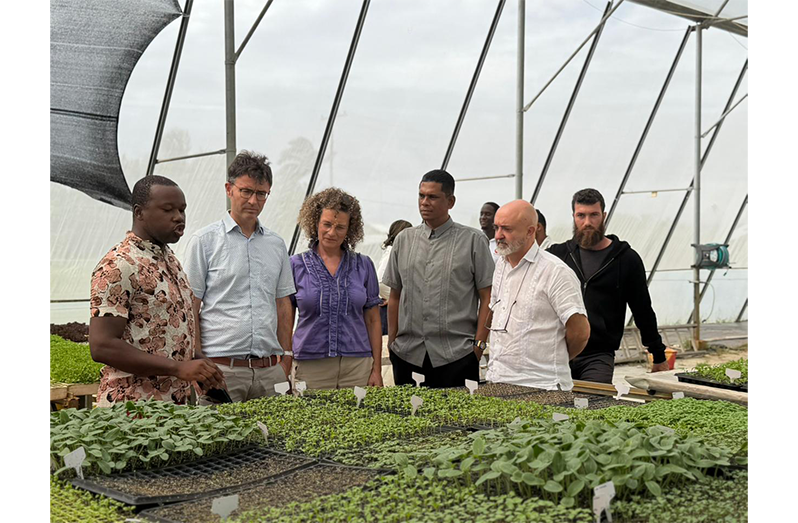
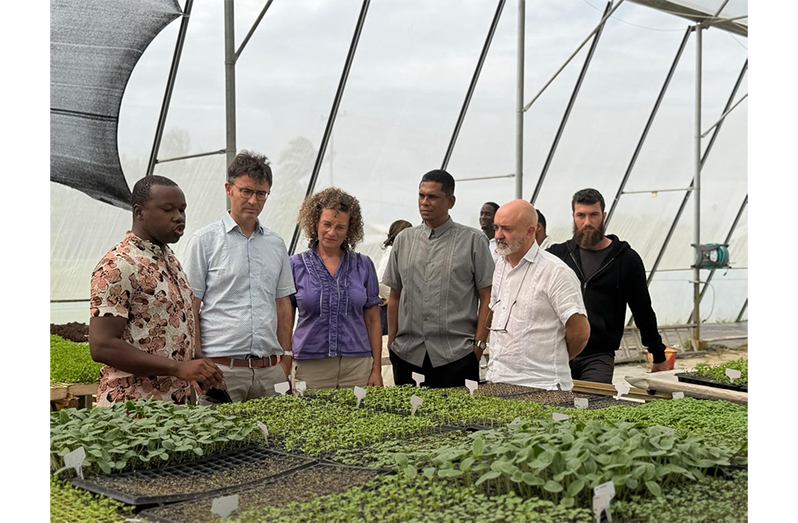
One of the most visible areas of agricultural modernisation is the expansion of shade-house cultivation and other protected farming systems.
According to information released by the Ministry of Agriculture in September, 69 shade houses were constructed during the first half of 2026, benefiting more than 460 farmers, including 51 women and 240 young people. The Ministry also reported plans to construct another 131 shade houses during the second half of the year. These additional facilities were targets rather than confirmed completed projects at the time of the report.
Shade houses help provide a more controlled environment for crop cultivation, offering protection from certain weather extremes and supporting the production of high-value vegetables. They are particularly relevant to Guyana’s efforts to expand vegetable production and improve the reliability of food supplies.
The importance of these developments has become increasingly evident amid changing weather conditions. The Ministry reported that the other-crops subsector contracted by an estimated 6.4 per cent in the first half of 2026, with prolonged and above-normal rainfall causing waterlogging, crop damage and disruptions to farming activities.
These challenges demonstrate why climate-smart agriculture must remain central to the country’s development plans. Although protected cultivation cannot eliminate all weather-related risks, it can help farmers manage some production challenges more effectively.
The connection between agriculture and energy
As Guyana expands its agricultural capabilities, energy infrastructure will have an important role to play in supporting the sector’s development.
Modern farming requires dependable energy for irrigation pumps, refrigerated storage, food-processing machinery, automated production systems and transport-related infrastructure. As farmers adopt increasingly sophisticated technologies, access to reliable and affordable electricity becomes an important factor in determining how efficiently these systems can operate.
This creates a significant connection between Guyana’s agricultural ambitions and its wider energy development strategy.
The Government’s 2026 budget provided G$119.4 billion for implementation of its energy strategy, including improvements to electricity transmission and distribution infrastructure. Separately, G$81.9 billion was allocated to drainage and irrigation works, demonstrating the scale of investment in infrastructure that supports agricultural production.
These allocations represent distinct programmes, but improvements in both sectors could create opportunities for greater agricultural productivity.
Reliable electricity can support agro-processing facilities, allowing farmers and businesses to move beyond selling raw agricultural products towards producing packaged, processed and higher-value goods. Refrigeration and cold-storage infrastructure can also help preserve perishable produce, reduce post-harvest losses and improve the ability of local producers to supply regional markets.
Renewable energy technologies, including solar-powered irrigation and off-grid power systems, present additional opportunities, particularly for remote agricultural communities where access to conventional electricity infrastructure may be limited.
However, realising these benefits will require more than investments in electricity generation alone. It will also depend on transmission and distribution infrastructure, appropriate equipment, technical expertise, maintenance and the affordability of energy services for agricultural producers.
Creating opportunities for young farmers and entrepreneurs
The transformation of Guyana’s agriculture sector is also creating opportunities for young people to participate in an industry that is becoming increasingly connected to technology, entrepreneurship and modern business practices.
The Agriculture Innovation and Entrepreneurship Programme has emerged as one of the initiatives supporting this transition. In May 2026, Minister Mustapha reported that approximately 1,000 shade houses were operating across the country, while about 300 young people were participating in the programme’s associated agricultural enterprise.
The facilities support the production of leafy vegetables for domestic consumption and export markets, providing an example of how modern farming approaches can create new business opportunities.
As technological applications expand, the agricultural industry could also generate greater demand for individuals with expertise in agricultural engineering, equipment maintenance, data analysis, automated irrigation, renewable energy systems and food-processing technology.
This represents an opportunity to change perceptions of agriculture, particularly among young Guyanese who may previously have viewed farming primarily as labour-intensive work rather than a potential career involving science, technology and entrepreneurship.
Training, access to financing, technical support and reliable markets will nevertheless remain important in ensuring that more young people can establish sustainable agricultural businesses.
Strengthening Guyana’s role in regional food security
Guyana’s agricultural modernisation is taking place against the backdrop of a wider Caribbean effort to increase regional food production and reduce dependence on imported agricultural commodities.
In his Agriculture Month message on October 1, President Dr Mohamed Irfaan Ali identified innovation, investment and value-added production as central to the country’s ambition of becoming a major regional food hub.
The President also emphasised that agricultural development must extend beyond primary production to include improvements in processing, preservation, transportation and marketing.
Progress in rice production provides one indication of the country’s productive capacity. According to figures highlighted in the Agriculture Minister’s 2026 message, rice production increased from approximately 500,000 tonnes in 2020 to 810,299 tonnes in 2025.
However, expanding production alone will not guarantee stronger regional market access.
To compete effectively, Guyana’s agricultural sector must also address issues such as product quality, storage capacity, transportation costs, processing standards and the reliability of supply.
Continued investment in energy, transportation networks and modern agricultural infrastructure will therefore be important to ensuring that increased production translates into lasting commercial opportunities.
Building a more resilient agricultural future
While the expansion of technology and infrastructure represents significant progress, the long-term success of Guyana’s agricultural transformation will depend on how effectively these investments respond to the practical challenges faced by farmers.
Climate variability remains a major concern, particularly for producers exposed to flooding, prolonged rainfall and periods of intense heat. The costs associated with modern equipment, technical training and maintenance can also place newer technologies beyond the reach of some small-scale farmers.
Ensuring that technological development benefits both large agricultural enterprises and smaller producers will be important to making the sector more inclusive and competitive.
There is also a need for continued collaboration among government agencies, educational institutions, private investors, technology providers and energy companies. Such partnerships could support the development of affordable agricultural technologies, improve technical capacity and encourage investment in food-processing and storage infrastructure.
As Guyana continues to develop its oil and gas resources, agriculture provides an important opportunity to build economic resilience beyond the petroleum industry. The relationship between the two sectors is not simply one of financial investment, but also of infrastructure, technological development and the creation of new industries.
Agriculture Month 2026 is therefore more than a celebration of the country’s farming heritage. It provides an opportunity to examine how modern technologies, reliable energy, climate resilience and strategic investment can shape the future of food production.
For Guyana, the next stage of agricultural development will not be determined solely by how much land is cultivated, but by how effectively innovation, infrastructure and energy are brought together to produce more efficiently, compete in new markets and build a sustainable agricultural economy.