
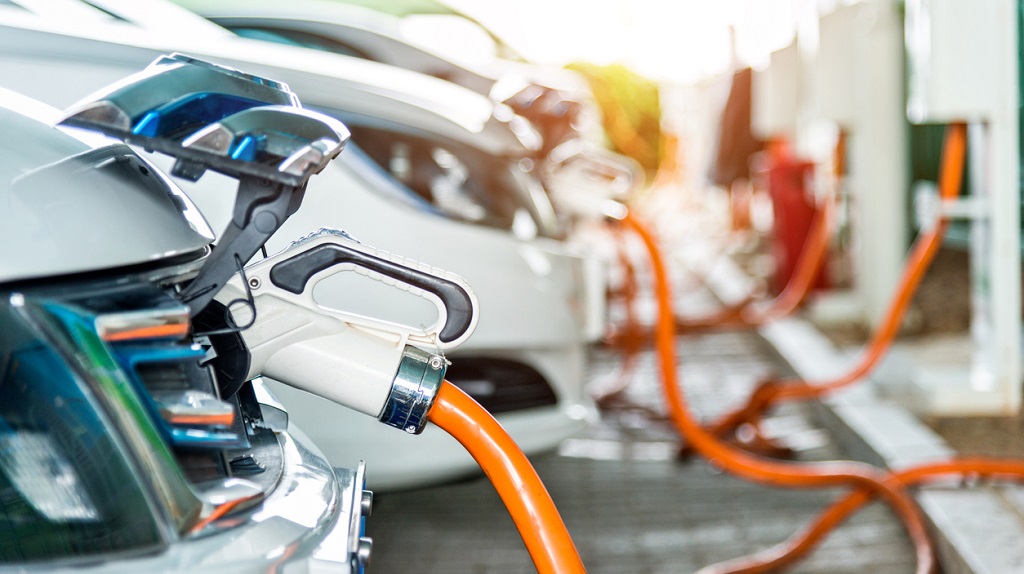
Guyana’s transportation landscape is beginning to change.
Electric vehicles are introducing a new model of mobility built around batteries, charging infrastructure, electricity demand and new technical skills. The transition is still at an early stage, but EVs are already on local roads, public charging infrastructure is expanding, fiscal incentives are in place and businesses are beginning to identify opportunities in the sector.
More than 280 electric vehicles were operating locally by late 2025, according to the Guyana Energy Agency (GEA). At that time, six publicly accessible charging stations were operating in Regions Three, Four and Six. In June 2026, the Government announced that Guyana is expected to have 24 publicly accessible EV charging stations by the end of the year. These developments suggest that Guyana has moved beyond simply discussing electric mobility. The foundations of an EV ecosystem are beginning to take shape.
Building the Charging Network
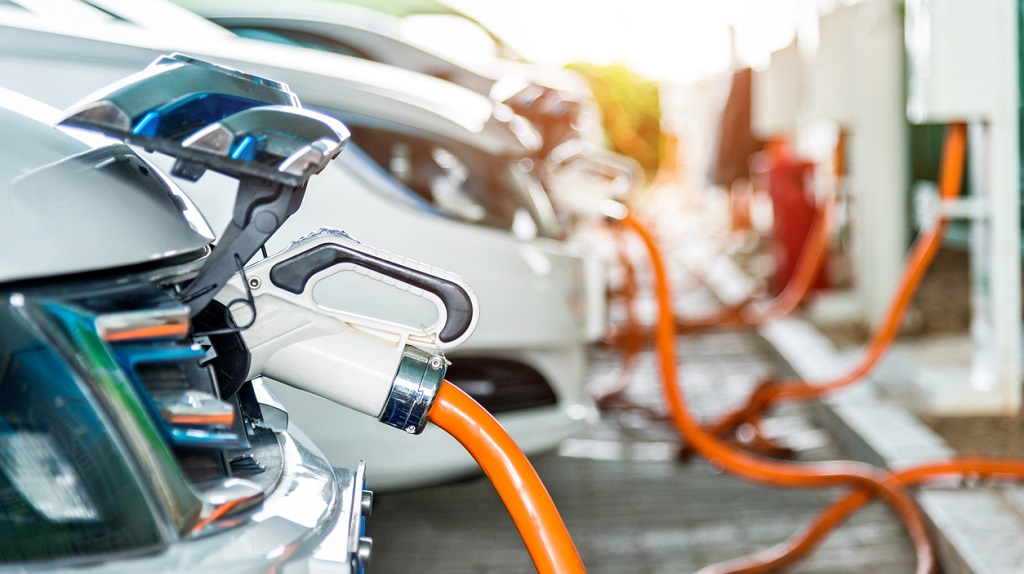
One of the biggest factors influencing EV adoption is access to charging.
Guyana’s initial public charging network includes facilities at locations such as Amazonia Mall at Providence, Giftland Mall, the GEA headquarters in Georgetown, the S&R Parking Lot at Parika, the Cheddi Jagan International Airport and Little Rock Suites in New Amsterdam.
GEA reported that between the commissioning of the first public charger in December 2023 and October 2025, the network supplied more than 21,600 kilowatt-hours of electricity across 3,410 charging sessions. The planned expansion to 24 publicly accessible charging stations is therefore an important step, but long-term success will depend on more than the number of chargers. Location, reliability, charging speed, maintenance and ease of payment will all affect consumer confidence.
Private-sector participation could also become increasingly important. Shopping centres, supermarkets, hotels, offices and residential developments may eventually view EV charging as an additional service for customers and tenants. A vehicle could be charged while its owner shops, works, eats or stays overnight. In time, EV charging could become a standard feature of modern commercial developments.
New Pressure on the Electricity System
Electric vehicles reduce dependence on petrol and diesel, but they shift part of transportation demand to the electricity grid. This is important because Guyana’s electricity demand is already rising rapidly. In August 2026, Guyana Power and Light reported that peak demand on the Demerara-Berbice Interconnected System had reached 242.6 megawatts, compared with 221 megawatts in 2025. GPL also projected demand could reach 266 megawatts by the end of October 2026.
The current number of EVs is too small to place major pressure on the grid. However, if adoption grows into the thousands, charging patterns will matter. If many drivers plug in during evening peak-demand periods, EV charging could add further strain to the system. That makes forward planning essential. Smart charging, rooftop solar, solar carports and battery storage could all help reduce pressure on the grid and allow electric mobility to develop alongside Guyana’s wider electricity transformation.
The Cost of Going Electric
For most consumers, cost will be one of the biggest factors determining whether they switch to an EV.
Electric vehicles have traditionally carried higher upfront prices, but the range of models available has expanded considerably. Local dealerships are already marketing fully electric vehicles at different price points. GT Automotive, for example, advertises the BYD Dolphin Mini at approximately G$4.5 million, with larger models available at higher prices.
Government incentives have also reduced some of the cost barriers. Electric vehicles benefit from major tax and duty exemptions, while businesses can also access an increased annual write-down allowance for EV purchases. Still, buyers need to consider more than the purchase price.
The real calculation includes electricity costs, financing, maintenance, insurance, battery warranties, resale value and fuel savings. EVs generally have fewer moving parts than conventional vehicles and do not require engine oil changes, but they also create new concerns around battery condition, electronics and access to trained technicians.
Building Local Skills
A successful EV transition will require more than vehicles and chargers.
Guyana will also need technicians capable of maintaining battery systems, high-voltage electrical components and specialised diagnostic equipment. Progress has already started. GEA reported in 2025 that 77 auto electricians and mechanical technicians had received training in electric-vehicle maintenance and repairs.
This skills development will become increasingly important as the market expands. It could also create new opportunities for young Guyanese in areas such as EV maintenance, electrical contracting, charger installation, battery technology, renewable energy and fleet management.
Consumer Confidence Still Matters
Even with infrastructure and incentives, consumers need confidence in the technology.
Potential buyers are likely to ask practical questions about driving range, charging time, battery life, repairs, resale value and how EVs will perform under Guyanese conditions. These concerns will require clear and accessible information.
Consumers should be able to compare battery capacity, realistic driving range, charging speed, warranties and operating costs just as easily as conventional-car buyers compare engine size and fuel consumption. Government agencies, dealerships, banks and insurers can all help improve awareness and understanding.
Fleet adoption could also play a useful role. Taxis, delivery companies, government fleets and corporate vehicles could provide visible examples of how EVs perform in everyday Guyanese conditions.
New Business Opportunities
The growth of electric mobility could generate opportunities far beyond vehicle sales.
Businesses may find new markets in charging equipment, installation and maintenance, solar-powered charging, battery diagnostics, electrical upgrades, specialised insurance, financing and technician training. Real estate developers may also need to start planning for EVs.
Apartment complexes, hotels and office buildings constructed today may still be operating decades from now, when electric vehicles could represent a much larger share of the vehicle fleet. Installing charging capacity during construction may be easier and cheaper than retrofitting properties later.
The Road Ahead
Guyana’s electric-vehicle transition will not happen overnight.
EV numbers remain small, charging infrastructure is still developing and the electricity system is already facing growing demand. But the direction is becoming clearer.
Electric vehicles are on the road. Charging infrastructure is expanding. Fiscal incentives are lowering barriers. Local technicians are being trained, and new commercial opportunities are emerging. The next phase will depend on how well these areas develop together.
Charging infrastructure must keep pace with vehicle adoption. Electricity planning must account for future transport demand. Consumers need reliable information, and businesses need to recognise where new opportunities are emerging. Guyana’s EV transition is unfolding at an especially interesting moment, as the country simultaneously expands petroleum production, upgrades its electricity system and invests in renewable energy.
Electric mobility is therefore not a separate development. It is becoming another part of Guyana’s wider energy transformation.
The road ahead may not become fully electric anytime soon, but the shift has already begun.