
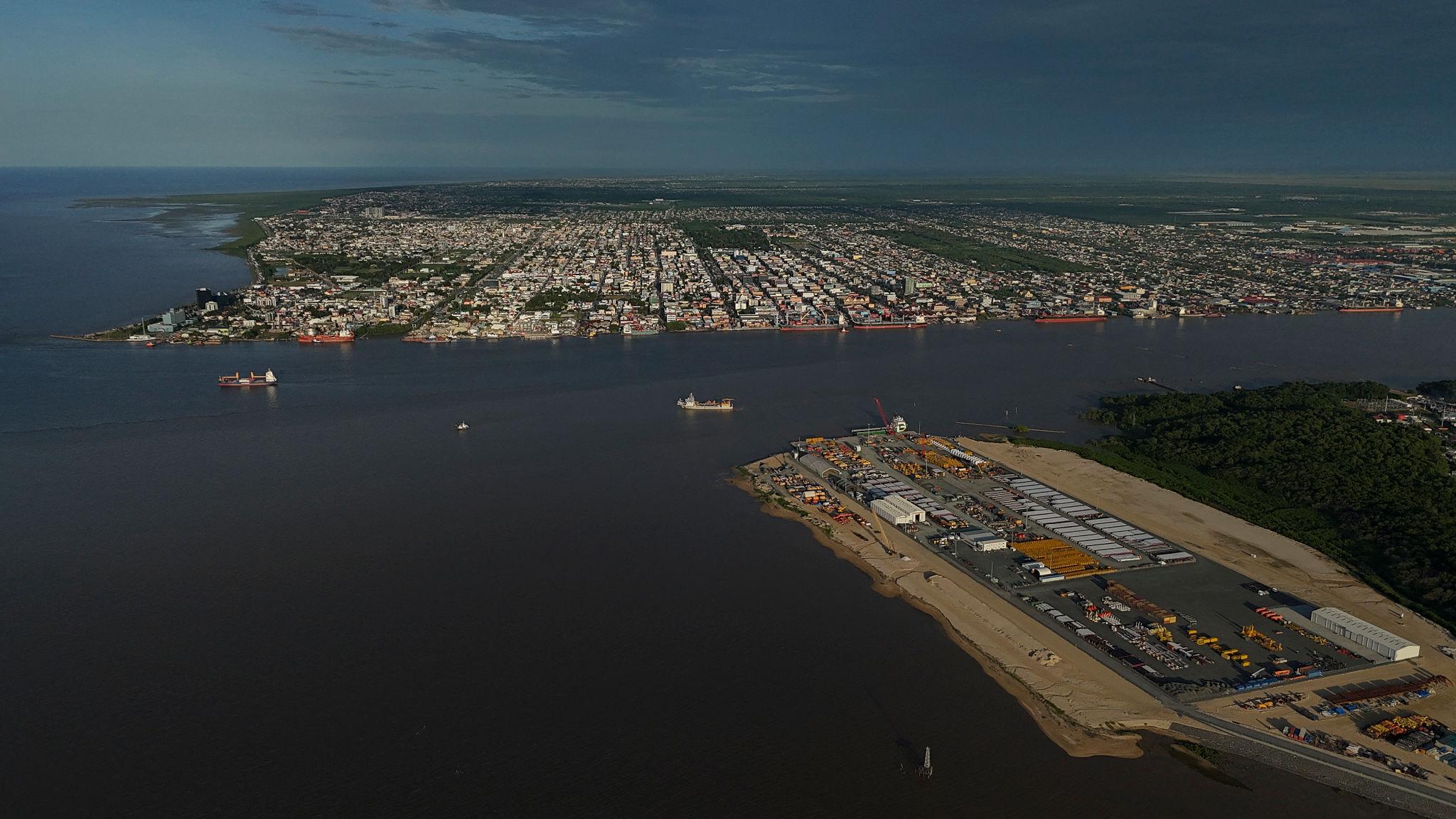
Guyana’s rapid economic expansion is transforming the demands being placed on its maritime infrastructure.
As offshore petroleum production increases, imports expand and the country strengthens its position in regional trade, ports and marine facilities are becoming increasingly important to Guyana’s long-term development.
The scale of this transformation is already evident. Guyana’s vessel traffic has increased by approximately 42 per cent since 2020, while containerised imports have grown from around 42,000 twenty-foot equivalent units (TEUs) annually to close to 150,000 TEUs, according to Minister of Public Utilities and Aviation Deodat Indar.
This growth is creating new opportunities for continued investment in deeper shipping channels, larger cargo-handling facilities, modern shore bases and port infrastructure capable of supporting both traditional trade and the country’s expanding offshore energy sector.
Expanding Access for Larger Vessels
As Guyana’s maritime sector expands, continued investment in deeper and more efficient navigational channels is becoming increasingly important, particularly along the Demerara River, where several major commercial and energy-related facilities are located. In May 2026, the Maritime Administration Department signed a US$11.2 million contract with Boskalis CPG Inc. for dredging approximately nine kilometres of the Demerara navigational channel from Houston to Golden Grove.
The works cover a channel approximately 100 metres wide and five metres deep and are intended to improve vessel access and port efficiency. Budget 2026 also provides G$6.3 billion to advance dredging at the mouth of the Demerara River. Government has indicated that capital dredging of the Demerara and Berbice river mouths will help accommodate larger vessels, lower shipping costs and strengthen Guyana’s competitiveness.
For businesses, improved maritime access can support the more efficient movement of machinery, construction materials, consumer goods and industrial equipment as domestic demand continues to rise. These investments form part of a broader effort to ensure that Guyana’s maritime infrastructure keeps pace with the country’s expanding economy.
Building a New Generation of Energy Ports
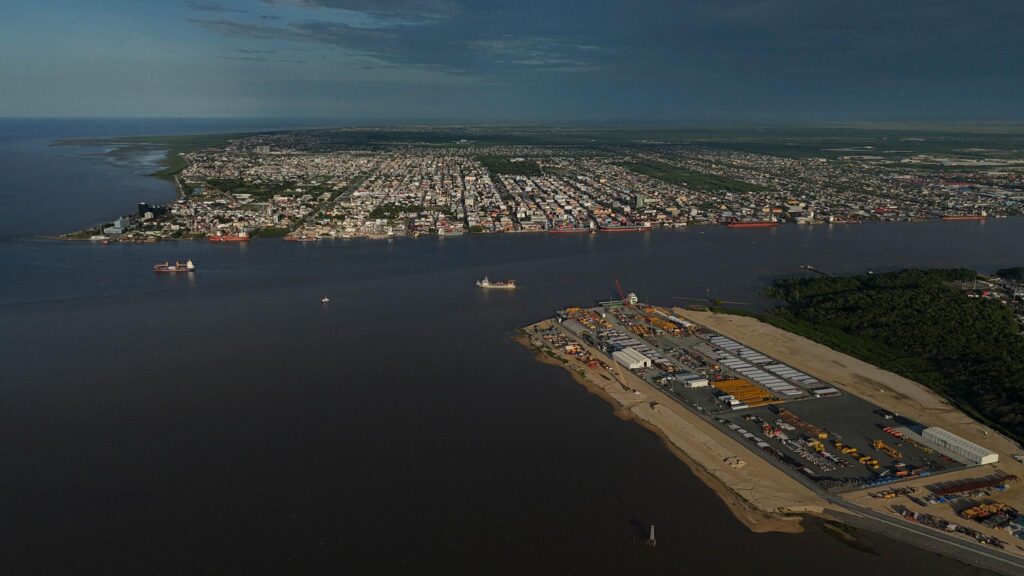
Guyana’s offshore petroleum sector is also accelerating investment in specialized marine infrastructure. The US$300 million Vreed-en-Hoop Shore Base, constructed on Guyana’s first artificial island, officially opened in January 2025. The facility supports offshore petroleum operations through services including storage, fabrication, subsea equipment handling and emergency-response infrastructure. Its role expanded further in 2026 with the positioning of an offshore capping stack at the facility, strengthening Guyana’s domestic capability to respond to offshore well-control emergencies.
Additional private-sector investment is also adding capacity. The TriStar Shore Base and Energy Terminal on the West Bank of Demerara represents a planned US$250 million investment. Its first phase includes approximately 320 metres of quayside with a seven-metre draft and infrastructure designed for offshore, general and project cargo operations.
Later phases are expected to include a container terminal, roll-on/roll-off facilities, an inland container depot, pipe yards and additional logistics infrastructure.Together, these investments demonstrate how Guyana’s maritime sector is evolving towards integrated logistics centres capable of supporting increasingly complex offshore operations while creating opportunities for local businesses and service providers.
Oil Production Raises the Scale of Demand
The timing of these investments is significant. Guyana’s four producing FPSOs were generating approximately 900,000 to 920,000 barrels of oil per day by August 2026. The arrival of the country’s fifth and largest FPSO, Errea Wittu, for the Uaru development is expected to push national production beyond one million barrels per day once production begins.
Higher offshore production is accompanied by greater demand for vessels, equipment, fabrication, warehousing, transportation, engineering, maintenance and specialised logistics.Ports and shore bases therefore provide an important connection between offshore investment and economic activity onshore.
Their expansion also creates opportunities for Guyanese businesses involved in marine transportation, customs brokerage, warehousing, heavy lifting, equipment rental, fabrication, environmental services, security and supply-chain management. As petroleum production grows, the supporting maritime sector is therefore becoming an increasingly important part of Guyana’s wider economic ecosystem.
Parika and the Expansion of Regional Trade
Guyana’s port development extends well beyond the petroleum sector. The Government is developing the Parika International Port Facility and Waterfront Development in Region Three, with the project intended to support trade, agriculture, shipping and tourism. Budget 2026 provides G$2.2 billion to advance construction of the facility, which is scheduled for completion by 2028.
Construction is already underway, with the first concrete poured in June 2026 as part of the approximately G$4.5 billion development. Plans include accommodation for cargo vessels and cruise liners, while a later phase is expected to incorporate marina infrastructure. Parika is also being positioned to support agricultural exports into CARICOM markets. Earlier plans for the development included cold-storage, packaging and agro-processing facilities aimed at improving the movement of perishable goods into regional markets.
This has the potential to strengthen market access for producers while supporting Guyana’s wider agricultural expansion and its contribution to Caribbean food security. The development also reflects the increasingly diversified role being envisioned for the country’s ports, connecting maritime transport with agriculture, tourism, trade and regional commerce.
Towards a Regional Logistics Hub
Guyana’s maritime ambitions extend further. Government has identified the development of a deep-water port as part of its longer-term strategy for Region Three and the wider maritime sector.
Such a facility could allow Guyana to accommodate significantly larger vessels, support bulk cargo movements and strengthen the country’s position within regional and international shipping networks. It could also complement Guyana’s strategic location on the northern coast of South America and its expanding economic connections with Brazil, CARICOM and international markets.
Supporting Guyana’s emergence as a regional logistics hub will also involve continued improvements in customs efficiency, road connectivity, cargo-handling technology, maritime security, workforce development and regulatory systems. These areas are increasingly important as port infrastructure becomes integrated with wider national investments in roads, bridges, industrial zones and energy infrastructure.
The effectiveness of Guyana’s ports will therefore be strengthened by the infrastructure surrounding them. Budget 2026 allocated G$11.2 billion to the wider river-transport sector, including investments in dredging and new port facilities at locations such as Parika, Charity and Port Kaituma. Together, these developments point towards a more connected national transportation and logistics network capable of supporting growth across several sectors.
Preparing for the Next Phase of Growth
Guyana’s ports are being positioned to serve an economy that is growing rapidly and becoming increasingly connected to regional and international markets. Oil production is moving beyond one million barrels per day, container imports have increased significantly, new industrial investments are emerging and the country is expanding its role in Caribbean trade and commerce.
The next phase of maritime development will therefore be centred on capacity, efficiency and connectivity. Deeper channels, larger terminals, specialized shore bases and stronger connections between ports and industrial areas can help Guyana accommodate higher trade and energy volumes while improving the overall movement of goods and services.
Government and private-sector investments are already laying the foundation for this transformation. The wider opportunity is significant. With continued investment in maritime infrastructure, logistics services, workforce development and regional connectivity, Guyana’s ports can become more than gateways for a growing domestic economy.
They can serve as important platforms connecting energy, agriculture, manufacturing, tourism and trade while supporting Guyana’s emergence as an increasingly important commercial and logistics centre in the Caribbean and northern South America. As Guyana prepares for higher trade and energy volumes, the continued development of its ports will play an important role in supporting the country’s economic transformation, strengthening competitiveness and creating new opportunities for businesses, investors and communities.