
Guyana’s energy story may be unfolding offshore, but much of its long-term economic impact is being built onshore. Behind every vessel, offshore platform and energy project is a wide network of ports, roads, warehouses, suppliers, skilled workers, financial institutions and service providers. Together, they form the supply chain that keeps the industry moving.
A single piece of equipment needed offshore may pass through customs, travel by road, enter a warehouse, undergo inspection and then be transported to a marine facility before reaching its final destination. Each stage requires reliable infrastructure, capable businesses and trained personnel.
This is where one of Guyana’s greatest opportunities is emerging. The country is not only developing an energy sector. It is building an entire economy around it.
The industry behind the industry
Energy operations require much more than petroleum expertise. Vessels need fuel, maintenance and supplies. Workers require transportation, accommodation, catering, healthcare and training. Equipment must be imported, stored, inspected and delivered on schedule.
Operators and contractors also depend on engineering, construction, telecommunications, insurance, legal services, environmental management, security, manufacturing and waste disposal. This means that companies across almost every sector can become part of Guyana’s energy supply chain.
A farmer supplying fresh produce, a trucking company transporting equipment, a hotel accommodating technical workers or a technology company providing cybersecurity may all contribute to the same industry.
The opportunity is wide, but the expectations are high. Energy-sector clients require reliability, safety, quality and proper documentation. Businesses must demonstrate that they can deliver consistently and meet strict standards.
Infrastructure keeps the supply chain moving
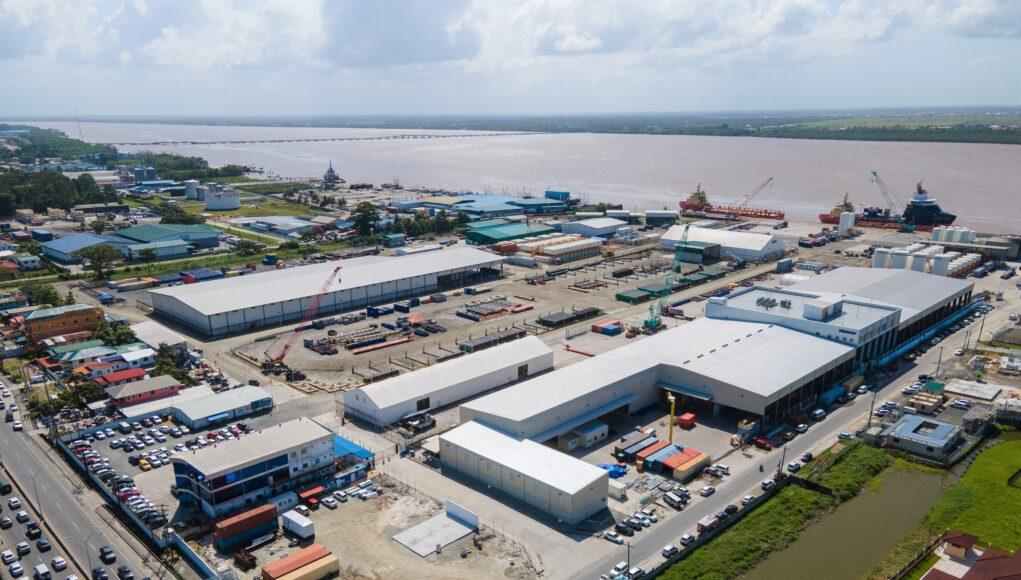
A supply chain can only be as efficient as the infrastructure supporting it. Ports, roads, bridges, airports, utilities and digital networks determine how quickly people, equipment and services can move.
For energy-sector companies, delays can be costly. Congested roads, limited storage, unreliable electricity or interruptions at key transport points can affect both onshore and offshore operations.
Guyana has therefore continued investing in its transport network. In February 2025, the World Bank approved a US$156 million Integrated Transport Corridors Project to improve the safety, reliability and climate resilience of selected roads.
This focus is especially important because much of Guyana’s population and commercial activity is concentrated along the low-lying coast, where flooding and congestion can disrupt movement.
Private investment in ports, shore bases, warehouses, storage yards and logistics facilities is also expanding Guyana’s ability to support the energy sector.
However, these facilities cannot operate effectively in isolation. A modern port still needs reliable roads, electricity, digital connectivity, efficient customs systems and qualified workers. The strongest supply chain will emerge when all these systems are connected.
Local content is expanding participation
Guyana’s local-content framework is playing an important role in connecting energy activity to domestic businesses and workers.
The Government reported in the 2025 National Budget that more than 1,100 companies were registered under the local-content system. It also reported approximately US$743 million in expenditure during 2024 on services, employment and capacity development involving Guyanese companies and citizens.
Local opportunities have extended into construction, accommodation, transportation, catering, equipment rental, food supply, trucking, waste management, fabrication and mechanical services.
This demonstrates that local content is not limited to offshore technical roles. It creates opportunities throughout the wider economy. However, registration alone is not enough.
The next stage must focus on business capability. Local companies need financing, trained employees, proper equipment, certifications and strong management systems to compete for larger contracts.
Progress should therefore be measured not only by how many companies enter the sector, but by how many grow into stronger and more specialised suppliers.
Opportunity across every sector
Guyana’s energy supply chain is not one industry. It is a network of industries connected by demand. Logistics companies can provide trucking, freight forwarding, warehousing and marine transportation. Construction firms can develop industrial facilities, offices, roads and accommodation.
Manufacturers can supply uniforms, safety equipment, fittings, packaging and fabricated components. Agriculture and food-service companies can provide fresh produce, catering and vessel supplies.
Technology firms can offer cybersecurity, telecommunications, tracking systems and data management. Healthcare providers can deliver medical examinations, occupational health services and emergency care.
Financial institutions, insurers, accountants, legal professionals and consultants also help businesses manage contracts, financing, risk and regulatory requirements.
For smaller companies, partnerships may offer the best route into the market. Joint ventures, subcontracting and supplier arrangements can help businesses combine expertise, equipment and financing.
Financing and standards remain critical
Many energy-sector contracts require companies to purchase equipment, hire workers or begin delivering services before receiving payment. This can create major cash-flow challenges, especially for small and medium-sized businesses.
Access to working capital, loans, guarantees and investment financing is therefore essential. Guyana’s 2026 National Budget allocated US$100 million to the Guyana Development Bank, which is intended to support financing for small and medium-sized enterprises and other targeted groups.
Businesses must also meet demanding health, safety, environmental and quality standards. Companies may be required to provide evidence of staff training, equipment inspections, licences, insurance and documented operating procedures.
Although meeting these requirements can be costly, strong compliance systems can lead to larger contracts, stronger partnerships and opportunities in other industries.
Building skills for the future
Infrastructure can be developed quickly, but human capacity takes time. Guyana will need more engineers, technicians, welders, machinery operators, logistics professionals, project managers, environmental specialists and safety personnel.
Training programmes must be connected to actual industry demand. They should prepare workers for real jobs and recognised performance standards, rather than simply producing certificates. The country will also need stronger business leadership. As local companies expand, managers must be able to handle larger teams, complex contracts and international clients.
Creating value beyond energy
Guyana’s current supply-chain expansion is being driven by offshore energy, but the infrastructure and capabilities being developed should support the wider economy. Ports, roads, warehouses and industrial facilities can also benefit agriculture, mining, manufacturing, tourism and regional trade.
Skills developed for offshore operations can later be applied to renewable energy, construction, marine services and other industries. The goal should not be to create a supply chain that depends permanently on petroleum. It should be to use energy growth as a platform for building stronger businesses, better infrastructure and a more skilled workforce.
Guyana’s energy story may begin offshore, but its lasting value will be determined onshore. It will be seen in the companies that grow, the workers who gain new skills, the infrastructure that improves business efficiency and the investment that creates opportunities across generations.
Behind every energy project is a supply chain. Behind that supply chain is the opportunity to build a stronger and more competitive Guyana.